☉︎ Sun
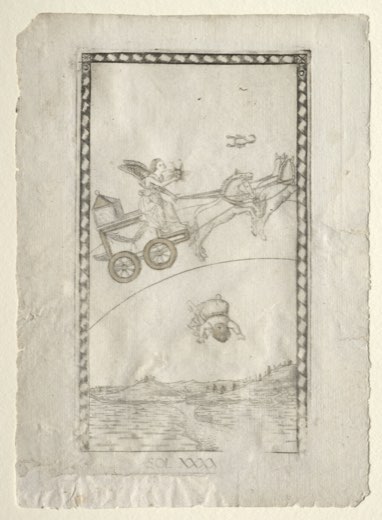
The heart of the sky and the giver of life. The Sun stands for the self at its centre, for health and vitality, sovereignty, honour and fame, and for everything that shines by its own light. The old astrologers called it hot and dry in a temperate degree, and reckoned it neither good nor bad in itself but royal.
Correspondences
- Day
- Sunday, and the first hour after sunrise on that day. See the planetary hours.
- Works
- Success, health, honours, confidence, and asking favours of people in authority.
- Metal
- Gold. See alchemy.
- Number
- 6, with a magic square of 6 by 6. Draw on it with the sigil maker.
- Colours
- Gold and yellow. See candles.
- Incense
- Frankincense; all gums and resins. The Heptameron gives red sandalwood for its day. See incense.
- Names
- Greek Helios; Hebrew Shemesh; Arabic al-Shams.
- Greek vowel
- Iota, in the scheme that gives the seven vowels to the seven spheres.
Angels and spirits
- Angel of the day
- Michael, in the Heptameron. See Angels.
- Intelligence
- Nachiel
- Spirit
- Sorath
- Olympic spirit
- Och
- On the Tree
- Tiphareth, Beauty, the sixth sephira. Divine name YHVH Eloah ve-Daath; archangel Raphael. The Golden Dawn's archangel of the sphere is not always the Heptameron's angel of the day.
- In the Goetia
- Kings, whose seals are made in gold. Bael, Paimon, Beleth, Purson, Asmoday, Viné, Balam, Zagan, Belial.
- Gods
- Helios, Apollo, in later antiquity, Shapash
Seals and characters
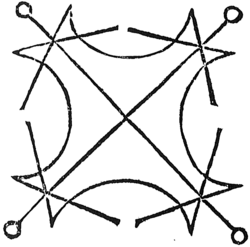 Seal of the planet
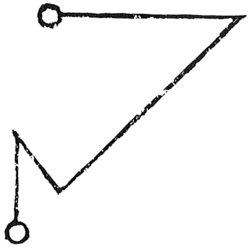 Intelligence
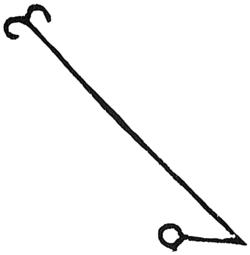 Spirit
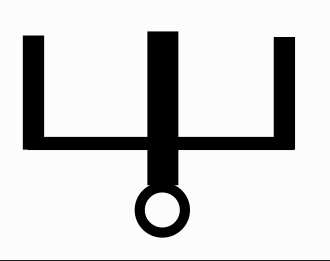 Och

The seal of the planet and those of its intelligence and spirit are from Agrippa, book two; the strip of letters is his set of the planet's characters, from book one. The last figure is the character of the Olympic spirit, from the Arbatel.
What belongs to it
- In the herbal
- Rosemary, Bay Laurel, Chamomile, St John's Wort, Marigold, Angelica, Saffron. The whole herbal.
- Agrippa's plants
- Marigold, heliotrope, peony, bay, saffron and frankincense.
- Agrippa's animals
- The lion, the cock, the eagle and the phoenix.
- Stones
- Carbuncle, chrysolite, heliotrope or bloodstone, the rainbow stone iris, and stones with golden sparkles. See crystals.
- Pentacles
- 7 in the Key of Solomon. The first: “The countenance of Shaddaï the almighty, at whose aspect all creatures obey, and the angelic spirits do reverence on bended…” All the pentacles.
Agrippa's lists follow the reasoning of his time, by likeness: yellow and bright things to the Sun, cold and heavy things to Saturn. Several of the plants are poisonous.
Sources and further reading
- Agrippa, Three Books of Occult Philosophy, book one, chapters twenty-three to twenty-nine, for the stones, plants and animals; chapter thirty-three for the characters; book two, chapter twenty-two, for the squares, intelligences and spirits. English translation of 1651.
- The Heptameron attributed to Peter of Abano, translated by Robert Turner (1655), for the angels and incenses of the days.
- The Arbatel of Magick, translated by Robert Turner (1655), for the Olympic spirits.
- Israel Regardie, The Golden Dawn (1937 to 1940), and Aleister Crowley, 777 (1909), for the sephiroth, divine names and archangels.
- Claudius Ptolemy, Tetrabiblos, book one, for the natures of the planets; William Lilly, Christian Astrology (1647).
- The Greek vowels of the planets are given in ancient sources including Nicomachus of Gerasa; see Joscelyn Godwin, The Mystery of the Seven Vowels (1991).

