Instrument
Planetary Hours
The day from sunrise to sunset is cut into twelve hours and the night into twelve more. Each belongs to one of the seven planets, in an order that never changes.
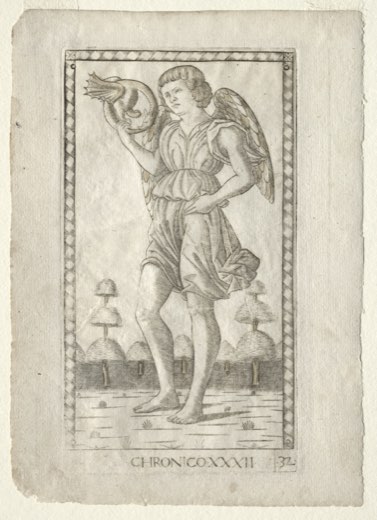
Hours of the day
Hours of the night
What each hour is used for
| Planet | Traditionally chosen for |
|---|---|
| ☉︎ Sun | Success, health, honours, asking favours of people in authority |
| ☽︎ Moon | Dreams, travel, the home, anything that should change or grow |
| ♂︎ Mars | Courage, defence, cutting things off, hard physical work |
| ☿︎ Mercury | Writing, study, trade, messages, divination |
| ♃︎ Jupiter | Growth, money, law, generosity, blessing |
| ♀︎ Venus | Love, friendship, beauty, art, reconciliation |
| ♄︎ Saturn | Endings, boundaries, binding, patience, the dead |
The first hour after sunrise belongs to the planet that rules the day: the Sun on Sunday, the Moon on Monday, Mars on Tuesday, Mercury on Wednesday, Jupiter on Thursday, Venus on Friday and Saturn on Saturday. After that the hours follow the Chaldean order, from the slowest planet to the fastest: Saturn, Jupiter, Mars, Sun, Venus, Mercury, Moon.
Because the hours divide real daylight, they are longer than sixty minutes in summer and shorter in winter. The planetary day runs from one sunrise to the next, so the hours before dawn still belong to yesterday.
The angel shown for each hour is the angel of its planet in the Heptameron. See Angels for the full table.
Sources and further reading
- The Key of Solomon the King, book one, chapter two, translated by S. L. MacGregor Mathers (1889).
- The Heptameron attributed to Peter of Abano, translated by Robert Turner (1655), for the angels of the hours.

