The Gods · Japan
Ame-no-Uzume
The heavenly kami of dawn, mirth and dance
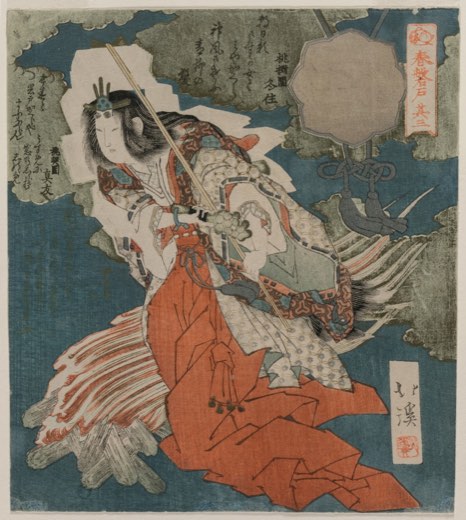
When Amaterasu hid in the cave, Uzume turned a tub upside down before it, climbed on, and danced, stamping until it boomed and letting her clothes fall, so that eight hundred myriad kami shook heaven with laughing. The Sun looked out to see why anyone could be merry in the dark. The sacred dances of the shrines, kagura, are traced to her.
- Governs
- Symbols
- The overturned tub; bamboo leaves; bells
- Sources
- Kojiki; Nihon Shoki
For what this book says about offerings of smoke, see incense.
Further reading
- Donald L. Philippi, translator, Kojiki (1968).
- W. G. Aston, translator, Nihongi (1896).
- John Breen and Mark Teeuwen, A New History of Shinto (2010).
- Karen A. Smyers, The Fox and the Jewel (1999), on Inari.
- Robert Borgen, Sugawara no Michizane and the Early Heian Court (1986).

