The Gods · The Norse
Thor
The Thunderer; defender of gods and men
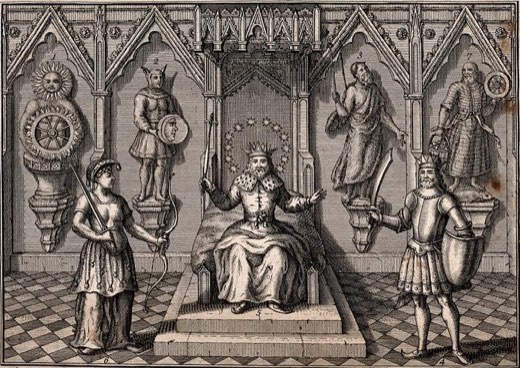
Thor keeps the giants out of the world of gods and men, and was the most widely loved of the gods. He fishes for the serpent that circles the world with an ox's head for bait, and will kill it and be killed by it at the end. People wore his hammer as an amulet, and rune-stones ask him to hallow them. Thursday is his day.
- Governs
- Symbols
- The hammer Mjölnir; the belt of strength and iron gloves; the chariot drawn by two goats; the oak
- Also
- Thunor in England, Donar in Germany. Equated with Jupiter for the day's sake, and with Hercules.
- Ancient sources
- Þrymskviða; Hymiskviða; Snorri Sturluson, Gylfaginning 21 and 44 to 48
For what this book says about offerings of smoke, see incense.
Further reading
- Carolyne Larrington, translator, The Poetic Edda (revised edition, 2014).
- Snorri Sturluson, Edda, translated by Anthony Faulkes (1987).
- John Lindow, Norse Mythology: A Guide to the Gods, Heroes, Rituals, and Beliefs (2001).
- E. O. G. Turville-Petre, Myth and Religion of the North (1964).
- Neil Price, The Viking Way (2nd edition, 2019).

