The Gods · Canaan and Phoenicia
Tanit
Face of Baal; Lady of Carthage
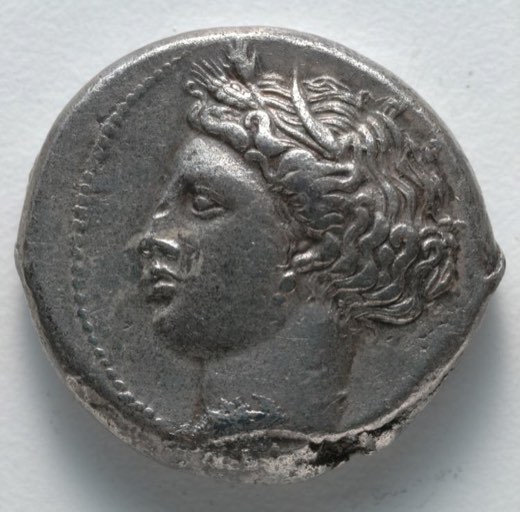
The chief goddess of Carthage from the fifth century BCE, always named first on its thousands of dedications, 'to the Lady, to Tanit Face of Baal, and to the Lord, to Baal Hammon'. What was done in the precincts where those stones stood, with their urns of infants' ashes, is still argued over by scholars.
- Governs
- Symbols
- The sign of Tanit, a triangle topped by a bar and a circle; the crescent; the open hand; the palm tree
- Also
- The Romans called her Juno Caelestis. An inscription from Sarepta in Lebanon names 'Tanit-Ashtart', so she began in Phoenicia.
- Ancient sources
- Punic votive inscriptions from Carthage; the Sarepta inscription
For dates, see the festival calendar; for what to burn, see incense.
Further reading
- Simon B. Parker, editor, Ugaritic Narrative Poetry (1997), for the Baal Cycle and the other tablets in translation.
- Mark S. Smith, The Early History of God (2nd edition, 2002).
- Dennis Pardee, Ritual and Cult at Ugarit (2002).
- Glenn E. Markoe, Phoenicians (2000).
- Corinne Bonnet, Melqart: Cultes et mythes de l'Héraclès tyrien en Méditerranée (1988).

