The Gods · Japan
Raijin and Fūjin
Thunder and Wind
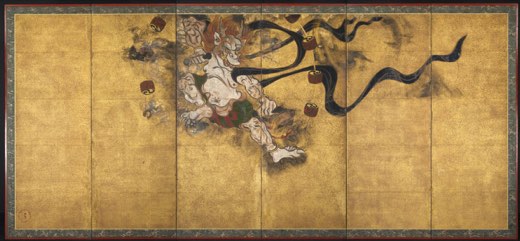
The two are usually seen together, as fierce and half-comic demons: Raijin with a wheel of drums that he beats to make thunder, Fūjin with a sack of wind across his shoulders. Their statues guard the hall of Sanjūsangen-dō in Kyoto, and the screens painted by Tawaraya Sōtatsu fixed how Japan imagines them. Children are told to cover their navels in a storm, or Raijin will have them.
- Governs
- Symbols
- The ring of drums; the great bag of winds
- Sources
- Kojiki, for the thunder kami born from Izanami's body; temple and folk tradition
For what this book says about offerings of smoke, see incense.
Further reading
- Donald L. Philippi, translator, Kojiki (1968).
- W. G. Aston, translator, Nihongi (1896).
- John Breen and Mark Teeuwen, A New History of Shinto (2010).
- Karen A. Smyers, The Fox and the Jewel (1999), on Inari.
- Robert Borgen, Sugawara no Michizane and the Early Heian Court (1986).

