The Gods · Egypt
Ptah
Lord of truth; the craftsman who thought the world into being
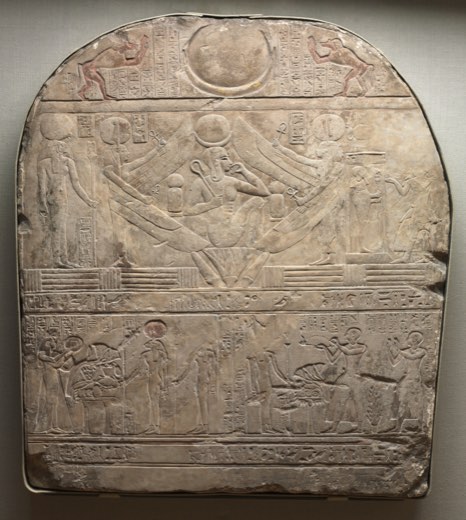
The god of Memphis and patron of everyone who makes things. A text carved for King Shabaka says he created by thinking each thing in his heart and speaking it with his tongue: through what the heart plans and the tongue commands, every god and every thing came to be. The Apis bull was his living herald. One name of his temple, Hut-ka-Ptah, is the root of the Greek word Aigyptos, Egypt.
- Governs
- Symbols
- The close-fitting cap and shroud; the staff joining the ankh, djed and was signs; the Apis bull
- Also
- Hephaistos to the Greeks.
- Ancient sources
- The Memphite Theology on the Shabaka Stone
For what this book says about offerings of smoke, see incense.
Further reading
- Richard H. Wilkinson, The Complete Gods and Goddesses of Ancient Egypt (2003).
- Geraldine Pinch, Egyptian Mythology: A Guide to the Gods, Goddesses, and Traditions of Ancient Egypt (2002).
- Erik Hornung, Conceptions of God in Ancient Egypt: The One and the Many (1982).
- Miriam Lichtheim, Ancient Egyptian Literature (three volumes, 1973 to 1980), for the texts in translation.
- Emily Teeter, Religion and Ritual in Ancient Egypt (2011).

