The Gods · Egypt
Isis
Great of magic; mother of the god; the throne
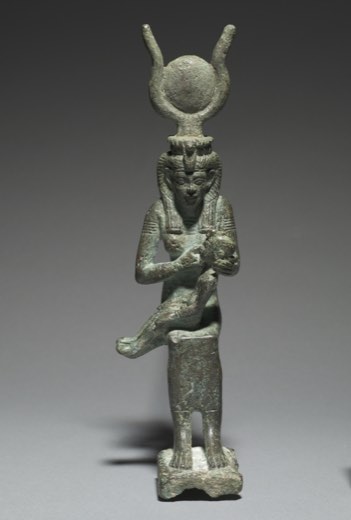
The cleverest of the gods. She learned Ra's secret name by a trick and so won power over everything. She searched for the body of Osiris, revived him by her words, hid in the marshes to bear Horus and guarded him from snake and scorpion; the healing spells of Egypt tell these stories so that the sick child becomes Horus and the healer Isis. In Greek and Roman times her worship spread from Philae to Britain.
- Governs
- Symbols
- The throne sign on her head; the knot called tyet; the kite; later the cow horns and sun disc
- Honoured with
- Milk, water from the Nile, bread, flowers
- Also
- Egyptian Ꜣst, often written Aset or Auset.
- Ancient sources
- Pyramid Texts; the Metternich Stela; Plutarch, On Isis and Osiris; Apuleius, The Golden Ass, book eleven
For what this book says about offerings of smoke, see incense.
Further reading
- Richard H. Wilkinson, The Complete Gods and Goddesses of Ancient Egypt (2003).
- Geraldine Pinch, Egyptian Mythology: A Guide to the Gods, Goddesses, and Traditions of Ancient Egypt (2002).
- Erik Hornung, Conceptions of God in Ancient Egypt: The One and the Many (1982).
- Miriam Lichtheim, Ancient Egyptian Literature (three volumes, 1973 to 1980), for the texts in translation.
- Emily Teeter, Religion and Ritual in Ancient Egypt (2011).

