The Gods · Egypt
Horus
The distant one; avenger of his father; lord of the Two Lands
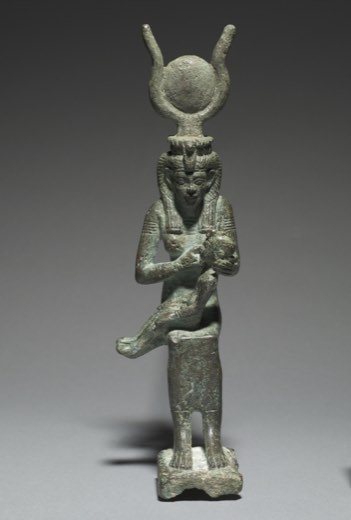
There are several gods of this name. The oldest is the falcon whose wings are the sky and whose eyes are the Sun and Moon. The best known is the son of Isis and Osiris, who grows up in hiding and fights his uncle Set for the throne through eighty years of trials. He loses an eye in the struggle; Thoth restores it, and the healed eye, the wedjat, became the most used amulet in Egypt. Every living king was Horus.
- Governs
- Symbols
- The falcon; the double crown; the wedjat eye
- Also
- Egyptian Ḥr, often written Heru.
- Ancient sources
- Pyramid Texts; the Contendings of Horus and Seth, Papyrus Chester Beatty I
For what this book says about offerings of smoke, see incense.
Further reading
- Richard H. Wilkinson, The Complete Gods and Goddesses of Ancient Egypt (2003).
- Geraldine Pinch, Egyptian Mythology: A Guide to the Gods, Goddesses, and Traditions of Ancient Egypt (2002).
- Erik Hornung, Conceptions of God in Ancient Egypt: The One and the Many (1982).
- Miriam Lichtheim, Ancient Egyptian Literature (three volumes, 1973 to 1980), for the texts in translation.
- Emily Teeter, Religion and Ritual in Ancient Egypt (2011).

