The Gods · India
Hanuman
Son of the Wind; servant of Rama
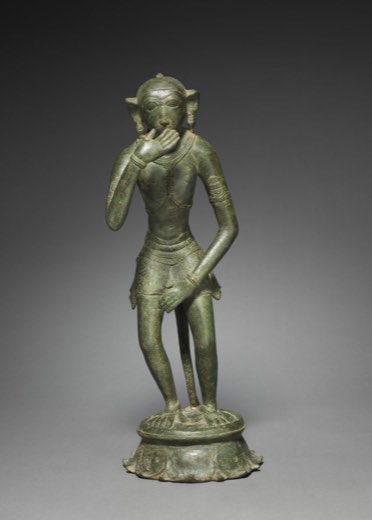
The monkey hero of the Ramayana. He leaps the sea to Lanka to find the stolen Sita, burns the city with his tail, and when Rama's brother lies dying and he cannot tell which herb is wanted, he brings back the whole mountain. He is strength entirely in the service of love. Tuesdays and Saturdays are his days, and the Hanuman Chalisa of the poet Tulsidas is among the best-known prayers in India.
- Governs
- Symbols
- The mace; the mountain of healing herbs carried in one hand; the chest opened to show Rama and Sita within
- Sources
- Valmiki, Ramayana, especially the Sundara Kanda; Tulsidas, Hanuman Chalisa
For what this book says about offerings of smoke, see incense.
Further reading
- Wendy Doniger, The Rig Veda: An Anthology (1981) and Hindu Myths: A Sourcebook (1975).
- Gavin Flood, An Introduction to Hinduism (1996).
- David Kinsley, Hindu Goddesses (1986).
- Diana L. Eck, Darśan: Seeing the Divine Image in India (1981).
- Thomas B. Coburn, Encountering the Goddess (1991), a translation of the Devi Mahatmya.

