The Gods · India
Ganesha
Remover of obstacles; lord of beginnings; Ganapati, lord of the hosts
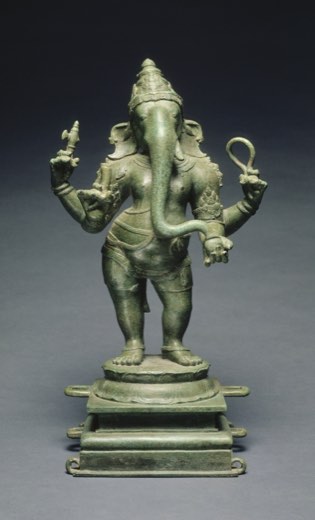
The elephant-headed son of Shiva and Parvati, honoured first at the start of any worship, journey, book or business. He places obstacles as well as removing them. Parvati made him to guard her door; Shiva, not knowing him, struck off his head and replaced it with an elephant's. He broke off his own tusk to use as a pen when he wrote down the Mahabharata. His great festival is Ganesh Chaturthi, in August or September.
- Governs
- Symbols
- The elephant head with one tusk; the sweet called modak; the axe and noose; the mouse he rides
- Honoured with
- Modak and other sweets, durva grass, red flowers
- Sources
- Shiva Purana; Ganesha Purana; Mudgala Purana
For what this book says about offerings of smoke, see incense.
Further reading
- Wendy Doniger, The Rig Veda: An Anthology (1981) and Hindu Myths: A Sourcebook (1975).
- Gavin Flood, An Introduction to Hinduism (1996).
- David Kinsley, Hindu Goddesses (1986).
- Diana L. Eck, Darśan: Seeing the Divine Image in India (1981).
- Thomas B. Coburn, Encountering the Goddess (1991), a translation of the Devi Mahatmya.

