The Gods · Nigeria: Yoruba and Igbo
Eshu
Elegba; keeper of the crossroads; messenger of the orisha
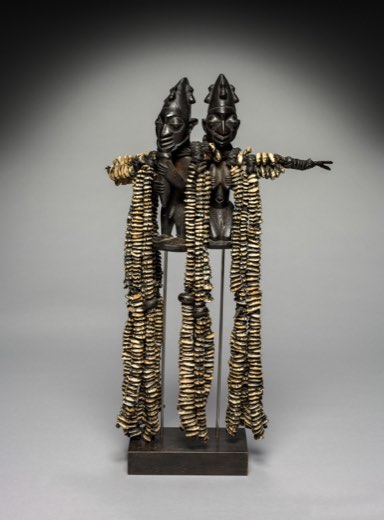
Eshu carries every offering to its destination and reports to Olodumare, so no orisha can be served unless he is served first. He tests people and upsets what is settled. In the best-known tale he walks between two friends' fields in a hat that is red on one side and black on the other, and they come to blows over its colour. Missionaries used his name to translate 'devil', which he is not. Yoruba spelling: Èṣù.
- Governs
- Symbols
- The mound of red earth at the gate or crossroads; cowries; the hooked staff; red and black
- Honoured with
- Palm oil, and a share of whatever is offered to anyone else
- Sources
- Wande Abimbola, Ifá: An Exposition of Ifá Literary Corpus (1976); John Pemberton, 'Eshu-Elegba: the Yoruba trickster god', African Arts 9 (1975)
For what this book says about offerings of smoke, see incense.
Further reading
- E. Bolaji Idowu, Olódùmarè: God in Yoruba Belief (1962).
- Wande Abimbola, Ifá: An Exposition of Ifá Literary Corpus (1976).
- William Bascom, Ifa Divination (1969).
- J. Omosade Awolalu, Yoruba Beliefs and Sacrificial Rites (1979).
- Emefie Ikenga Metuh, God and Man in African Religion (1981), and Herbert M. Cole, Mbari: Art and Life among the Owerri Igbo (1982), for the Igbo.

