The Gods · Egypt
Bes
The fighter; guardian of the household
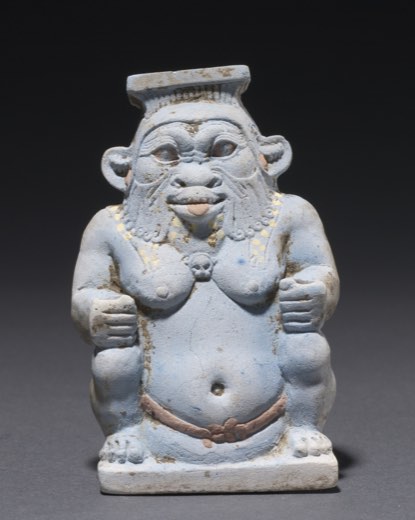
Bes had no great temples and needed none: he lived in people's houses. His image was carved on beds, headrests, mirrors and birth-bricks, because his ugliness and his noise frighten away whatever threatens women in labour, infants and sleepers. He dances, beats a drum and brandishes knives. He was loved for three thousand years and carried by Phoenician traders across the Mediterranean.
- Governs
- Symbols
- A bearded dwarf with a lion's mane, facing front, tongue out; the knife; the tambourine
- Ancient sources
- Amulets, furniture and house paintings, as at Deir el-Medina; the Bes chambers at Saqqara
For what this book says about offerings of smoke, see incense.
Further reading
- Richard H. Wilkinson, The Complete Gods and Goddesses of Ancient Egypt (2003).
- Geraldine Pinch, Egyptian Mythology: A Guide to the Gods, Goddesses, and Traditions of Ancient Egypt (2002).
- Erik Hornung, Conceptions of God in Ancient Egypt: The One and the Many (1982).
- Miriam Lichtheim, Ancient Egyptian Literature (three volumes, 1973 to 1980), for the texts in translation.
- Emily Teeter, Religion and Ritual in Ancient Egypt (2011).

