The Gods · Egypt
Amun
The Hidden One; king of the gods
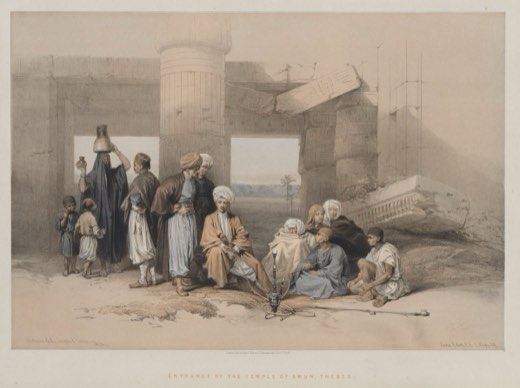
Amun's name means hidden: he is the god whose true form no one knows. From a local god of Thebes he rose with that city's kings until, as Amun-Ra, he was king of the gods, and Karnak, his house, became the largest temple in Egypt. The hymns call him the one who hears the prayer of whoever calls to him and who comes at the voice of the poor.
- Governs
- Symbols
- The tall double-plumed crown; the ram with curved horns; the goose
- Also
- Egyptian Imn. Ammon to the Greeks, who equated him with Zeus.
- Ancient sources
- The Great Hymn to Amun, Papyrus Leiden I 350; Papyrus Boulaq 17
For what this book says about offerings of smoke, see incense.
Further reading
- Richard H. Wilkinson, The Complete Gods and Goddesses of Ancient Egypt (2003).
- Geraldine Pinch, Egyptian Mythology: A Guide to the Gods, Goddesses, and Traditions of Ancient Egypt (2002).
- Erik Hornung, Conceptions of God in Ancient Egypt: The One and the Many (1982).
- Miriam Lichtheim, Ancient Egyptian Literature (three volumes, 1973 to 1980), for the texts in translation.
- Emily Teeter, Religion and Ritual in Ancient Egypt (2011).

