Theatrum Chemicum Britannicum (1652): Ashmole’s Alchemical England
27 July 2026
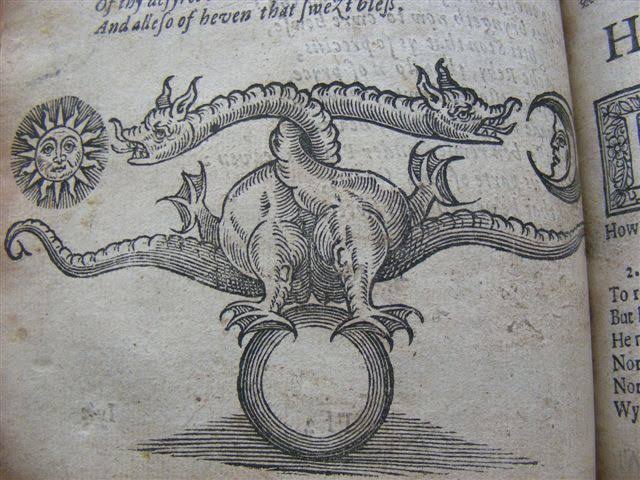
In 1652 Elias Ashmole, astrologer, antiquary, founding fellow-to-be of the Royal Society, and the man whose collections would seed the Ashmolean Museum, published a large and loving anthology with a defiantly patriotic title: Theatrum Chemicum Britannicum: Containing Severall Poeticall Pieces of Our Famous English Philosophers, Who Have Written the Hermetique Mysteries in Their Owne Ancient Language. The "ancient language" is English verse: Ashmole gathered the alchemical poetry of medieval and Tudor England, Thomas Norton's Ordinall of Alchimy, George Ripley's Compound of Alchymie with its twelve gates, pieces fathered on Chaucer, Dastin, Charnock, and more, printed them from manuscripts he had hunted for years, and wrapped them in his own copious annotations. The book is at once an anthology, a manifesto, and one of the founding acts of the history of science in England, performed, delightfully, by a practicing astrologer.
What is in it
Norton's Ordinall (1477) opens the collection: a poem insisting alchemy is a divine gift transmitted master to pupil, full of workshop detail, failed assistants, fume-filled laboratories, the economics of patronage, that makes it a primary source for real medieval practice. Ripley's Compound (1471) supplies the discipline's curriculum as allegory: calcination, dissolution, separation, through the twelve gates to projection, the sequence later occultists would read as a map of inner transformation. Around these Ashmole set the shorter pieces, John Dastin's dream-visions, the "Hermet's Tale," verses ascribed to Chaucer on the crowd of false alchemists, and his own Prolegomena, which defends the English adepts as national treasures and drops the tantalizing autobiographical note that he himself received the secret from his master William Backhouse. Ashmole planned further volumes; only this one appeared, which is why the Theatrum is both a monument and a fragment.
Why it matters
Three reasons, ascending. First, preservation: several of these poems survive usably because Ashmole printed them; his manuscript hunting was rescue archaeology performed just before the sources scattered. Second, the historiographical turn: by treating alchemical texts as documents of a national intellectual past, worth editing, dating, and annotating, Ashmole invented, almost singlehandedly for England, the scholarly study of alchemy, the discipline that now returns the favor by studying him. Third, the picture of alchemy it fixes: learned, devout, poetic, and practical at once. The scholarship of Newman and Principe has taught us to read such texts' allegories as coded laboratory procedure as often as mysticism, and the Theatrum's poems support both readings in alternating stanzas, which is, arguably, the tradition's actual texture.
For this site's readers the book pairs naturally with the Corpus Hermeticum, theology and laboratory, the two wings of the Hermetic art, and with the standing lesson of Dee, Ashmole's own hero, whose papers he collected: in England the scientific revolution was raised by people who saw no border where we now draw one. Ashmole joined the Royal Society in 1661 without resigning a single conviction, and the Theatrum is the proof that, for one great collector at least, the mysteries and the archives were the same calling.
Sources & Further Reading
- Elias Ashmole, Theatrum Chemicum Britannicum (London: J. Grismond for Nathaniel Brooke, 1652).
- C. H. Josten, Elias Ashmole (1617–1692): His Autobiographical and Historical Notes, 5 vols. (Oxford, 1966).
- Thomas Norton, The Ordinall of Alchimy, ed. John Reidy (EETS, 1975).
- George Ripley, The Compound of Alchymy, ed. Stanton J. Linden (Ashgate, 2001).
- Lawrence M. Principe, The Secrets of Alchemy (Chicago, 2013).
- William R. Newman and Lawrence M. Principe, Alchemy Tried in the Fire (Chicago, 2002).
- Vittoria Feola, Elias Ashmole and the Uses of Antiquity (Paris: Classiques Garnier, 2013).