The Art of Hedge Riding, Part II: Crossing the Hedge
29 May 2026
The Art of Hedge Riding, part II of four. Part I - Part II - Part III - Part IV
Part I established the hedge-rider as a historical figure and flagged the scholarly quarrel over what the trial records mean. This installment asks the two questions the practice itself turns on: what is it that crosses, and what does tradition say waits on the other side?
What crosses
Medieval and early modern testimony is strikingly consistent on the mechanics. The body remains, apparently asleep or cataleptic, while something else travels, and that something has names across the European sources: the Norse hamr (shape) and hugr (mind), the fylgja that goes before, the double that leaves the sleeper as mouse, bee, or breath in a dozen collected legends. Lecouteux's survey of this material argues that pre-Christian Europe held a genuinely multiple soul, parts of which were separable in sleep, trance, and death, and that the Church's long war on the belief never quite killed it. The benandanti told their inquisitors they went out "invisibly, in spirit," and were anxious that the body not be turned over while they were away, lest the spirit fail to find its way home: a detail that recurs, with variations, from Iceland to the Balkans. The experience type is familiar to the comparative study of religion as soul flight, the defining technique of what Eliade called shamanism, though scholars now handle his universal category with gloves.
What lies beyond
The geography beyond the hedge is supplied by local tradition, and the practitioner inherits several maps. In the British and Irish material the far side is the fairy realm: reached through mounds, wells, caves, and mists, ruled by sovereign courts, rich in the dead, and governed by a hospitality with teeth. The ballads of Thomas Rhymer and Tam Lin are practical manuals in narrative form, complete with the standing rules: mind what you eat, mind what you promise, mind the time, which runs differently there. Robert Kirk's Secret Commonwealth (1691), a Highland minister's sober field report, describes the subterranean people's polity as matter-of-factly as a parish census. In the Norse material the crossing belongs to seiðr and to the platform-seated seeress of Eiríks saga rauða; in Ginzburg's Friulian records it is a field, a procession, a battle in the valley of Josaphat. The maps disagree in furniture and agree in law: the other side is inhabited, the inhabitants have protocols, and the traveler is a guest, not a tourist.
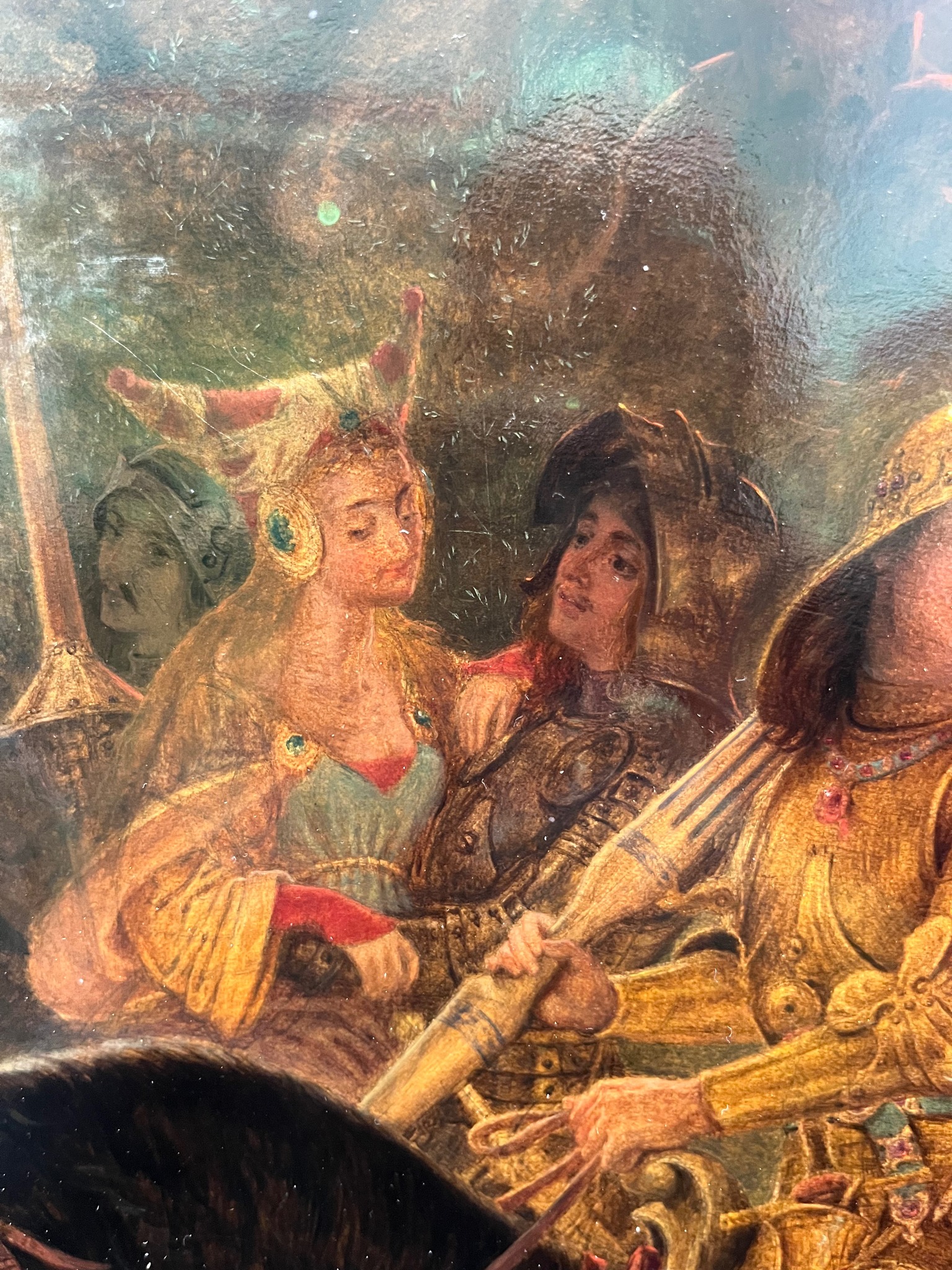
Which map should a modern rider use? The consistent advice of the traditions, echoed in Working across Belief Systems: choose one, learn its rules as if they were law, and honor them even when they seem arbitrary, because the arbitrariness is the law's signature. The crossing, as Part III will show, is the easy part.
Sources & Further Reading
- Claude Lecouteux, Witches, Werewolves, and Fairies (Inner Traditions, 2003).
- Carlo Ginzburg, The Night Battles (Johns Hopkins, 1983).
- Robert Kirk, The Secret Commonwealth of Elves, Fauns and Fairies (1691).
- Francis James Child (ed.), The English and Scottish Popular Ballads, nos. 37 (Thomas Rymer) and 39 (Tam Lin).
- Katharine Briggs, The Fairies in Tradition and Literature (Routledge, 1967).
- Eiríks saga rauða, ch. 4, for the seiðr séance.
- Mircea Eliade, Shamanism: Archaic Techniques of Ecstasy (1951; Princeton, 1964), read critically.