What Is a Spirit? Ontologies of the Invisible
27 January 2026
The practitioner's literature is full of instructions for dealing with spirits and strangely quiet on what a spirit is. The grimoires give protocols, not ontology; the papyri give recipes; the folk record gives etiquette and cautionary tales. The reticence is old and probably wise, but the question deserves a straight treatment, because the answer one silently assumes organizes everything else: what preparation means, what danger means, what success means.
The classical inventory
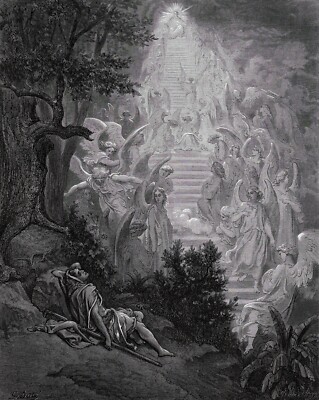
Antiquity had a technical vocabulary we have largely collapsed into a single anxious word. The Greek daimōn was a broad class of intermediate beings, not yet the Christian demon; Plato's Symposium places the daimonic explicitly "between god and mortal," carrying prayers up and answers down, and makes Eros himself one of them. Late Neoplatonism, especially Iamblichus' On the Mysteries, built full taxonomies, gods, archangels, angels, daimones, heroes, purified souls, each with characteristic appearances in vision, and theurgy was the discipline of telling them apart. The Christian centuries re-sorted this crowded middle into two columns, angels and demons, but the folk record stubbornly kept a third: the fairies, land-wights, house spirits, and unquiet dead who were neither, documented from Robert Kirk's Secret Commonwealth (1691), a Scottish minister's field report on the fairy realm, down to the modern collections. The grimoires' spirit catalogues, as our Goetia series argues, preserve exactly this middle world under a thin demonological paint job.
The modern options
Stated plainly, the live positions are three. Realism: spirits are what the traditions say, autonomous nonhuman persons with their own interests; this is the working stance of nearly every historical source and of the relational animism discussed in The World Is Full of Persons. Psychologism: spirits are exteriorized complexes, real as processes of the psyche and rightly treated with respect on those grounds; Jung's autonomous complexes gave the position its modern form, and his own Liber Novus shows him practicing what he theorized. Pragmatism: the characteristic modern hedge, treat spirits as if autonomous because the practice works better that way. Anthropologist Tanya Luhrmann's work supplies the pragmatist's empirical footing: invisible others, engaged through disciplined imaginative practice, become progressively more vivid, voiced, and independent-seeming, a process her informants experience as the relationship becoming real.
What survives every ontology
Three convergences, and they are the practical heart of the matter. Spirits are plural and unequal: every tradition distinguishes kinds and ranks, and the operator's first task in vision or evocation is identification, not conversation. Spirits are not simply obedient: the protocols, introduction, boundary, payment, dismissal, exist because the middle world has its own interests, whatever the middle world is made of. And relationship is cumulative: across realist, psychological, and pragmatist framings alike, regular practice deepens the contact, which is either the spirit coming to know you or the complex consolidating, and behaves identically either way. The definition can wait, the tradition suggests. The manners cannot.
Sources & Further Reading
- Plato, Symposium 202d–203a.
- Iamblichus, On the Mysteries, trans. Clarke, Dillon, Hershbell (SBL, 2003).
- Robert Kirk, The Secret Commonwealth of Elves, Fauns and Fairies (1691).
- C. G. Jung, "The Relations between the Ego and the Unconscious," Collected Works 7; The Red Book: Liber Novus (Norton, 2009).
- Tanya M. Luhrmann, How God Becomes Real (Princeton, 2020).
- Gregory Shaw, Theurgy and the Soul (Penn State Press, 1995).
- Graham Harvey, Animism: Respecting the Living World (Hurst, 2005).