From the Broom Closet II: The Occultism of the Spice Cabinet
20 February 2026
Modern occult publishing gives the impression that magic requires an inventory: censers, athames, seven colors of candle, herbs with unpronounceable names shipped in small expensive bags. The historical record says otherwise, and says it emphatically. The materia magica of most times and places has been the materia of the kitchen, because the kitchen is where plants, fire, salt, scent, and daily intention have always met, and because, as the first installment argued, the ordinary object is the oldest camouflage there is.
The evidence of the herbals
Nearly every common culinary plant carries centuries of documented magical and medical use, and the documentation is not obscure. Nicholas Culpeper's Complete Herbal (1653), one of the most reprinted books in the English language, assigns planetary rulers to kitchen plants as a matter of course: rosemary to the Sun, basil to Mars, thyme to Venus, and so on through the garden, each with its virtues. The system he popularized descends from the learned doctrine of correspondences codified in Agrippa's Three Books of Occult Philosophy, where the sympathies binding plants, planets, and purposes are the machinery of natural magic itself. Below the learned register, the folk record is thicker still. Harry Middleton Hyatt's five volumes of hoodoo fieldwork, thirteen thousand informant interviews collected across the American South between 1936 and 1970, read in places like an index of the pantry: salt, pepper, sugar, cinnamon, bay.
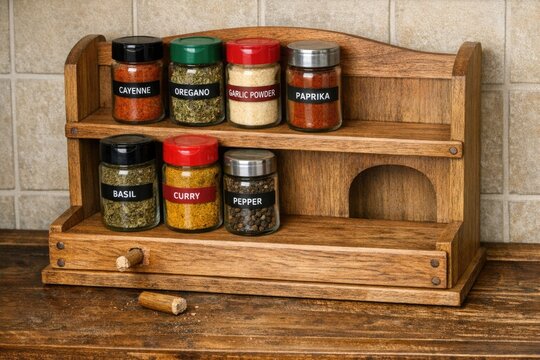
Salt deserves its own paragraph, being probably the most universal magical substance on record: Roman lustration, the salt of Greek sacrifice, the blessed salt of the Rituale Romanum, the protective lines and jars of a dozen folk traditions. A practitioner with nothing but salt possesses a purifier, a boundary, and an offering, and no observer will ever ask why there is salt in a kitchen.
Method
Historical method transfers to the modern kitchen almost without alteration. Infusion: intention spoken over a simmering pot or a steeping cup is a potion by any pre-modern definition; the medieval charm tradition is full of words said over ordinary preparations. Fumigation: a bay leaf or rosemary sprig on a warm burner is incense, and suffumigation is the standard delivery mechanism of the entire image-magic tradition. Dressing: oil and herb rubbed on a candle, a doorframe, or the hands, the workhorse technique of American conjure. Timing: Agrippa's planetary hours, computable from any almanac or app, cost nothing and show nothing, and turn a Tuesday soup into a Mars operation for those who want it to be one.
The point is not that the fancy tools are fraudulent; consecrated instruments have their own logic and their own literature. The point is the one the folklore archive makes on every page: the witch's cupboard and the cook's were, for most of history, the same cupboard, and the tradition that survived persecution, migration, and poverty did so precisely because its laboratory looked exactly like a kitchen. Part III follows the same logic out of the pantry and into the rest of the house.
Sources & Further Reading
- Nicholas Culpeper, The Complete Herbal (1653).
- Heinrich Cornelius Agrippa, Three Books of Occult Philosophy (1533), Book I, on natural magic and suffumigations.
- Harry Middleton Hyatt, Hoodoo–Conjuration–Witchcraft–Rootwork, 5 vols. (1970–78).
- Owen Davies, Popular Magic: Cunning-folk in English History (Hambledon, 2003).
- Richard Kieckhefer, Magic in the Middle Ages (Cambridge, 1989), ch. 3 on the common tradition.
- catherine yronwode, Hoodoo Herb and Root Magic (Lucky Mojo, 2002).